This section is designed to provide local officials with an
overview of metropolitan planning organizations – regional
agencies governed by local officials within their
metropolitan region. These agencies have important
responsibilities, including a new emphasis on regional
planning for transportation and housing as revised by SB 375.
Below is information on regional planning activities (including
the development of sustainable communities strategies), public
participation efforts and planning documents for each
metropolitan planning organization.
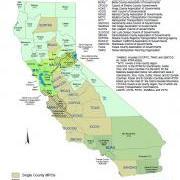
Federal law requires that any urbanized area with population of at least 50,000 be guided and maintained by a regional entity known as a metropolitan planning organization (MPO). SB 375 details specific roles for California MPOs, expanding their role in regional planning. Eighteen MPOs are designated in California, accounting for approximately 98% of the state’s population.
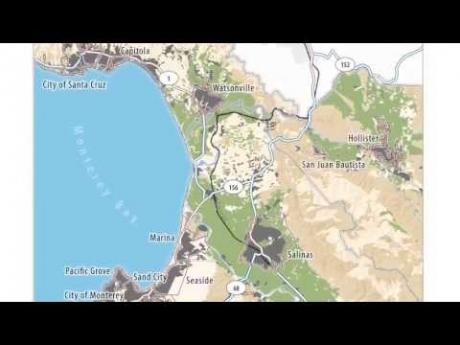
The Association of Monterey Bay Area Governments (AMBAG) is a voluntary association of 18 cities and 3 counties in California’s central coast region. AMBAG is the designated metropolitan planning organization for Monterey, San Benito and Santa Cruz counties.
Butte County Association of Governments (BCAG) is an voluntary
association of all the local governments within Butte County, and
is the designated metropolitan planning organization and regional
transportation planning agency for the region.
Fresno Council of Governments (Fresno COG) is a voluntary association of local governments, one of California’s 38 regional planning agencies and one of 500+ nationwide.
Kern COG, is an association of city and county governments created to address regional transportation issues. Its member agencies include the County of Kern and the 11 incorporated cities within Kern County.
The Madera County Transportation Commission is the regional transportation planning agency and the designated metropolitan planning organization for Madera County.
Merced County Association of Governments (MCAG) is an association of city and county governments, with members who meet to solve regional problems such as transportation, solid waste and air quality.
Metropolitan Transportation Commission (MTC) functions as both the regional transportation planning agency and the metropolitan planning organization for the region. The Association of Bay Area Governments (ABAG) is the comprehensive regional planning agency and the council of governments for the nine counties and 101 cities and towns in the San Francisco Bay Area.
San Diego Association of Governments (SANDAG) is the metropolitan planning organization for the 18 cities and county government in the San Diego region.
The San Joaquin Council of Governments (SJCOG) is a joint-powers authority comprised of the County of San Joaquin and the cities of Stockton, Lodi, Manteca, Tracy, Ripon, Escalon, and Lathrop.
The San Luis Obispo Council of Governments (SLOCOG) is an
association of local governments in the San Luis Obispo County
region. The central purpose of SLOCOG is to examine common
regional problems and suggest solutions.
The Santa Barbara County Association of Governments is a regional
planning agency comprised of Santa Barbara County and all eight
incorporated cities within the county.
The Shasta Regional Transportation Agency (SRTA) is the
metropolitan planning organization and the regional
transportation planning agency for Shasta County.
The Southern California Association of Governments (SCAG) is the largest of nearly 700 councils of government in the United States, functioning as the metropolitan planning organization for six counties: Los Angeles, Orange, San Bernardino, Riverside, Ventura and Imperial.
Stanislaus Council of Governments (StanCOG) is a council of city
and county governments for the Stanislaus County region that was
established in 1971 by a joint powers agreement to address
regional transportation issues.
Tahoe Metropolitan Planning Organization (TMPO) serves as the federally-designated metropolitan planning organization for the Tahoe region. The Tahoe Regional Planning Agency (TRPA) carries out planning requirements of the Bi-State Tahoe Regional Planning Compact and serves as the regional transportation planning agency for the California portion of the Lake Tahoe basin.
The Tulare County Association of Governments (TCAG) was formed by
a joint powers agreement, executed by the eight incorporated
cities and Tulare County in 1971. In 1982, TCAG was also
designated the metropolitan planning organization for Tulare
County.