• Home
  • Categories A-Z
  • Event Calendar
  • Forums
  • Popular Content
  • Site Map
  • Create Account
Home
Institute for Local Government
Promoting Good Government at the Local Level
ILG is the research and education affiliate of the California State Association of Counties and the League of California Cities.

SPONSOR THANK YOU!

The Institute is grateful to the James Irvine Foundation for its support of the Institute's Public Engagement Program.

DOCUMENTS & RESOURCES

application/pdf icon
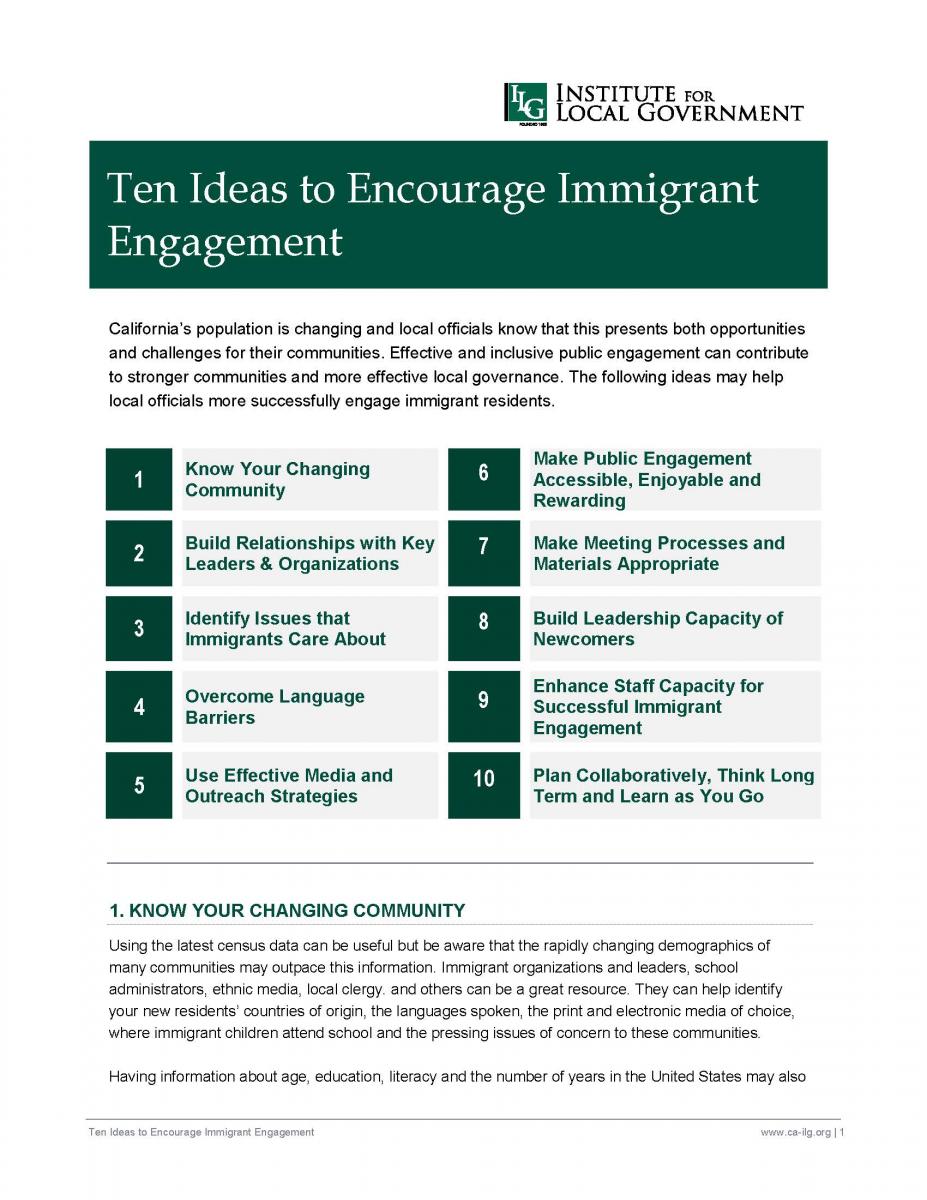
Ten Ideas to Encourage Immigrant Engagement

Related Topics

  • Engaging the Broader Community: Immigrants, Youth, and Congregations
  • Print
  • Email

Ten Ideas to Encourage Immigrant Engagement

California’s population is changing and local officials know that this presents both opportunities and challenges for their communities. Effective and inclusive public engagement can be an important contributor to stronger communities and more effective local governance. While every county and city is different, the following ideas from throughout California may help local officials to more successfully engage immigrant residents.

KNOW YOUR CHANGING COMMUNITY
Using the latest census data can be useful but be aware that the rapidly changing demographics of many communities may outpace this information. Immigrant organizations and leaders, school administrators, ethnic media, local clergy, and others can help identify your new residents’ countries of origin, the languages spoken, the print and electronic media of choice, where immigrant children attend school, and the pressing issues of concern to these communities.

Having information about age, education, literacy and the number of years in the United States may also be helpful. Remember that overgeneralizing about a community can make it more difficult to develop effective plans and processes. It is said that there is no such thing as the “general public” and there is probably not a “general immigrant public” in your community. Understanding the common as well as the distinguishing features of immigrant residents will help lay a foundation for effective outreach and participation strategies.

BUILD RELATIONSHIPS WITH KEY LEADERS AND ORGANIZATIONS
Communicate with immigrant community leaders and organizations early on in order to build relationships, learn about these communities, and convey your interest in involving immigrant residents in the civic and political life of the larger community. Develop and maintain a list of these individuals and organizations, be alert to opportunities to visit with them and engage them in local events and activities, and stay in touch with them on a regular basis.

IDENTIFY ISSUES THAT IMMIGRANTS CARE ABOUT
Through personal conversations, surveys and meetings with local organizations, identify issues of concern to immigrant communities and be prepared to include these topics in community conversations and other public engagement activities. You can also begin with discussions and civic participation within immigrant communities if the need is identified, as this can provide vehicles for participation and leadership development by those who might not otherwise get involved. Demonstrate how civic participation can help newcomers address their priorities and achieve their dreams.

OVERCOME LANGUAGE BARRIERS
Public engagement efforts should seek to ensure that every participant: is prepared to take part, will be understood, and will understand what others are saying. Outreach and issue background materials should be translated as appropriate for your communities, and translation equipment and services should be available. Outreach for public engagement events should include mention of the translation services. Ensure that the translation of materials is done by native speakers or by individuals completely fluent so that translations will be understood by readers. When conducting polls and surveys, it is best to ask questions in a resident’s first language when possible. Face-to-face, radio and other non-written communications will help you reach people with varying literacy levels.

USE EFFECTIVE MEDIA AND OUTREACH STRATEGIES
Make immigrant-oriented local and regional print and electronic media an integral component of your communication strategy. Develop relationships with these media outlets, provide them access to information and to local officials, send them news, notices and job listings, and engage them as partners in developing effective outreach to generate broader public involvement. Distribute information about an upcoming public engagement activity to appropriate community, service or business organizations, schools, congregations, etc. Ask leaders of these groups to include special solicitations to their immigrant members and to follow up and support those that are interested in attending.

MAKE PUBLIC ENGAGEMENT ACCESSIBLE, ENJOYABLE AND REWARDING
Make public meeting locations accessible to immigrant communities by holding them in neighborhoods where immigrant residents live, close to public transportation or, if appropriate, by providing transportation assistance. Safe and welcoming locations may include public schools, community centers, congregations, and residences of their community leaders. In scheduling meeting times, consider work, family, cultural and religious obligations. Provide onsite childcare and make culturally appropriate arrangements that include dietary preferences and entertainment. Be cautious of assumptions and generalizations, and ask immigrant residents what times, locations and settings would work best for them.

MAKE MEETING PROCESSES AND MATERIALS APPROPRIATE
When planning a public engagement event, meet with trusted and knowledgeable leaders and organizations and seek their input on recruitment and meeting processes. Be aware that relationships and perceived relative status and roles among those in the room may, in some cases, have an impact on readiness and confidence to participate. Working in small groups may often be the best approach. Have trusted community members help communicate the goals and process for the meeting, the role of participating public agencies, and how public input will impact the decision making process. All materials should be straightforward and translated as appropriate. Expressing appreciation and respect works for everybody.

BUILD LEADERSHIP CAPACITY OF NEWCOMERS
Provide training and leadership opportunities for immigrant groups including: citizen academies, English language classes, leadership training, and appointments to local boards and commissions. As appropriate for your community, consider leadership academies or trainings that are directed to particular communities and held in residents’ native language or in translation. Attend meetings of immigrant-related organizations to inform them about civic engagement opportunities. Look for mutually beneficial partnerships involving a local agency and immigrant organizations. Create a city or county plan for leadership development that will make follow through more likely.

ENHANCE STAFF CAPACITY FOR SUCCESSFUL IMMIGRANT ENGAGEMENT
Skilled local agency staff that have the time and ability to develop relationships with appropriate community organizations can help create and manage successful long-term immigrant engagement and integration efforts. Develop opportunities for city and county staff to learn about the history, culture and other dynamics and needs of local immigrant residents. Build these capacities in to staff hiring and training as appropriate.

PLAN COLLABORATIVELY, THINK LONG TERM AND LEARN AS YOU GO
A long-term plan with multiple strategies is more likely to result in significant outcomes. Be prepared to learn and adapt as you go. Involve immigrant-related organizations and/or leaders trusted by immigrant communities in planning, implementing and evaluating your immigrant civic engagement efforts. Find the right people and places to make this happen. Celebrate your successes.

This material is adapted and expanded from A Local Official’s Guide to Immigrant Civic Engagement, Institute for Local Government, 2009: www.ca-ilg.org/PEpubs

MORE FROM THE INSTITUTE

Engaging the Entire Community in Civic Participation

Reaching and Engaging Latino Communities

  • Researching an Issue?
    • Ethics
      • Leading by Values
        • Responsibility
        • Trustworthiness
        • Respect
        • Fairness
        • Loyalty
        • Compassion
      • Understanding Ethics Laws
        • Personal Gain
        • Gifts and Other Perks
        • Transparency
        • Fair Processes
        • Federal Law
        • Consequences
      • Ethics Tools
        • Ethics Assessments
        • Ethics Codes
        • Ethics Commissions
        • Audits
        • Lobbying Restrictions
      • Ethics Education (AB 1234 Training)
      • Analyzing Public Service Dilemmas
        • Gifts
        • Personal Activities
        • Perk Issues
        • At Meetings
        • Decision-Making Issues
        • Staff Relations and Other Administrative Issues
        • Use of Public Resources
      • Campaigning for Office
      • Ballot Measure Activities
    • Intergovernmental Collaboration
      • Joint Services and Joint Use
      • Conflict Resolution
        • Getting Help
        • Legal Issues
        • Case Studies
    • Local Government 101
      • Decision-Making Basics
      • Finance
      • Health & Human Services
      • Land Use
      • Personnel/Labor
      • School Materials
    • Public Engagement
      • Public Engagement Basics and Best Practices
      • Public Engagement Publications & Resources
      • Public Engagement Topic Areas
        • Planning, Housing & Redevelopment
        • Budgeting
        • Public Works
        • Human Services
        • Health and Environment
        • Climate Change
        • SB 375 and Public Engagement
          • Public Participation Plans
        • Public Safety
        • Day Labor Centers
        • Emergency Preparedness
      • Engaging the Broader Community: Immigrants, Youth, and Congregations
        • Immigrant Engagement & Integration
        • Youth Commissions & Engagement
        • Working with Clergy and Congregations
      • Online Engagement, Technology & Social Media
      • Sustaining Public Engagement
      • Resident Leadership Development and Citizen Academies
      • Public Engagement News & Events
    • Sustainable Communities
      • Climate Change
        • Climate Action & Sustainability Best Practices
          • Energy Efficiency & Conservation
          • Water & Wastewater Systems
          • Green Building
          • Waste Reduction & Recycling
          • Climate-Friendly Purchasing
          • Renewable Energy & Low-Carbon Fuels
          • Efficient Transportation
          • Land Use & Community Design
          • Open Space & Offsetting Carbon Emissions
          • Promoting Community & Individual Action
          • Greenhouse Gas Inventories
          • Climate Action Plans
          • Adapting to Climate Change
        • Climate Action & Sustainability Examples
          • Energy Efficiency & Conservation Examples
          • Water & Wastewater Systems Examples
          • Green Building Examples
          • Waste Reduction & Recycling Examples
          • Climate-Friendly Purchasing Examples
          • Renewable Energy & Low-Carbon Fuels Examples
          • Efficient Transportation Examples
          • Land Use & Community Design Examples
          • Open Space & Offsetting Carbon Emissions Examples
          • Promoting Community & Individual Action Examples
          • Greenhouse Gas Inventory Examples
          • Climate Action Plan Examples
          • Bay Area Climate Action Examples
        • Climate Action & Sustainability Resources
          • Energy Efficiency & Conservation Resources
          • Water & Wastewater System Resources
          • Green Building Resources
          • Waste Reduction & Recycling Resources
          • Climate-Friendly Purchasing Resources
          • Renewable Energy & Low-Carbon Fuels Resources
          • Efficient Transportation Resources
          • Land Use & Community Design Resources
          • Open Space & Offsetting Carbon Emissions Resources
          • Promoting Community & Individual Action Resources
          • Greenhouse Gas Inventory Resources
          • Climate Action Plan Resources
          • Bay Area Climate Action Resources
          • Climate-Related Events & Meetings
            • Bay Area Events
          • Online Discussion Forums & Blogs
            • Climate Change Blog
        • SF Bay Area Climate Portal
          • About this Portal
          • Bay Area Case Stories
          • Bay Area Resources
          • Portal Search Tool
            • Search Tool Feedback Form
      • Healthy Communities
        • Healthy Neighborhoods
          • Health, Economic Development and Redevelopment
          • Health and Housing
          • Health and Community Services
          • Health, Planning and Community Design
          • Health and Public Safety
          • Health, Transportation and Mobility
          • Healthy Workplaces
          • News, Events & Blog
        • Insuring Kids' Health: Online Resource Center
          • What's Right for My Community?
          • Community Stories
          • Frequently Asked Questions
          • Coordinating with Health Plans
          • Templates and Resources
          • Communities Outside of California
          • Online Discussion Forum
      • Land Use and Environment
        • Land Use and Environment Case Stories
          • Land Use Case Stories by Topic
            • Affordable Housing
            • Community Redevelopment and Revitalization
            • Infill Development
            • Mixed-Use and Transit-Oriented Development
            • Senior
          • Land Use Case Stories by Region
            • Bay Area
            • Central Coast
            • Central Valley
            • Los Angeles
            • Northern California
            • Orange County
            • San Diego
        • Land Use and Planning Resources
          • Understanding the Basics of Land Use and Planning
          • Housing
          • Planning Sustainable Communities
          • SB 375 and Regional Planning
            • SB 375 and Regional Planning
          • Property Rights & Takings
          • Participating Effectively in the Planning Process
          • Land Use and Planning Websites and Organizations
      • Sustainable Communities Learning Network
      • Beacon Award: Local Leadership Toward Solving Climate Change
        • How to Participate in the Beacon Award
        • Cities & Counties Participating in the Beacon Award
        • Participant Accomplishments
        • Beacon in the News
        • Beacon Award Discussion Forum
    • Nonprofit Partnerships
      • Resources
      • Community Stories
  • New to Local Public Service?
    • Responsibilities and Powers
    • Leadership Skills
    • Working With Staff
    • Working with Residents and the Media
    • Making Decisions
    • Fiscal Stewardship
    • Land Use
    • When Bad Things Happen
  • Publications
    • Ethics and Public Confidence
    • Fiscal Stewardship
    • Intergovernmental Collaboration
    • Land Use and Environment
    • Local Government 101
    • Public Engagement
    • Resources in Spanish
    • Past (Out of Print) Publications
    • ILG Logo Items
  • About ILG
    • Programs
    • Mission, Goal, Vision & Values
    • Support the Institute's Work
      • Partners
      • Endowment
      • Symposium Sponsorship
      • Donate Campaign Funds
    • People
      • Board of Directors
      • Staff
    • Our Parent Organizations
    • History
    • Jobs at ILG
      • Volunteer Opportunities & Internships
      • Benninghoven Fellowship (Under Development)
    • Contact
    • Honoring Public Service
      • Retirement Recognition
      • Don Benninghoven Fellowship Program
More options
 
© Institute for Local Government   |   RSS Feeds   |   Login